AI Ethics Checklists · May 2, 2026
Ensuring Fairness: Population Ethics in AI-Powered Visa Assessments
Understand how to ensure fairness and mitigate bias in AI-driven visa assessments for a transparent UK Innovator Visa process.

Fair Start: Embracing an AI Fairness Visa Approach
Modern visa processes are complex. They can feel opaque and prone to bias. Enter the idea of an AI fairness visa system. It promises clarity and consistency, rooted in population ethics. It sets the stage for transparent decisions at scale.
This article explores how to embed fairness into AI-driven visa checks. You will learn about Hswen’s AI-Y Checklist for ethical development. You will see how Torly.ai uses that checklist to boost your Innovator Founder Visa readiness. And you can get hands-on with our solution today—Embrace AI fairness visa with our AI-Powered UK Innovator Visa Application Assistant.
Understanding Population Ethics in AI Visa Checks
AI can speed up decisions and trim paperwork. But without careful design, it risks reinforcing existing inequalities. Population ethics asks: who benefits and who might be left behind? It forces us to look at data quality, accountability, and cultural context.
In visa contexts, fairness means equal treatment for diverse applicants. It demands transparency in scoring and a chance to challenge decisions. Let’s break down the core principles that keep AI honest.
The Power and Perils of Automated Decisions
- Automated checks can process thousands of applications in minutes.
- Biased training data can misclassify candidates from underrepresented groups.
- Lack of transparency may hide unfair rules in the code.
You might wonder: how do we ensure an AI fairness visa system stays on track? Enter a structured framework to flag risks and guide implementation.
Hswen’s AI Checklist Demystified
Researchers led by Yulin Hswen developed an ethical blueprint called the AI-Y Checklist. It covers ten key criteria:
- Model Adaptivity
- Accountability
- Diverse Development Teams
- Commercial Interest Assessment
- Contextual Adaptability
- Accessibility
- Privacy and Data Security
- Transparency
- Targeted Solutions
- Generalisability
Each point ensures AI tools work reliably across populations. That’s the heart of an AI fairness visa approach.
Integrating Ethics into the UK Innovator Visa with Torly.ai
Torly.ai is more than a document helper. It’s an AI agent built for fairness. It applies ethical checks at every step:
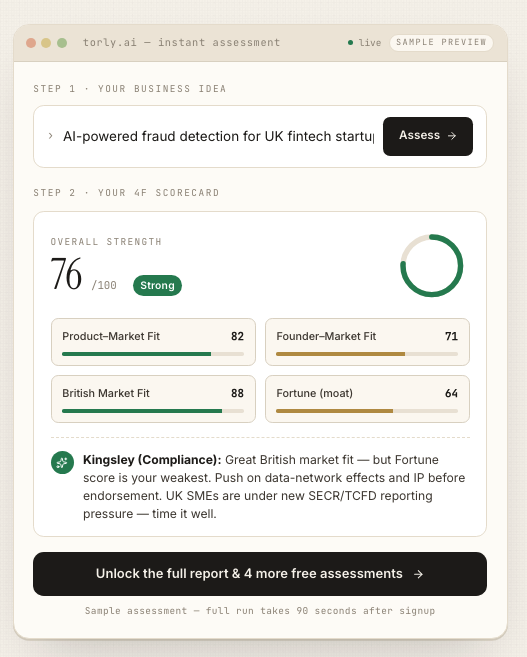
- Business Idea Qualification: Evaluates innovation against Home Office standards.
- Applicant Background Assessment: Scores your experience and entrepreneurial fit.
- Gap Identification & Action Roadmap: Suggests precise improvements for endorsement.
These dimensions map directly to Hswen’s ethical criteria. For instance, contextual adaptability means using local market data. Accessibility means a user-friendly platform anyone can use.
Once your draft business plan is ready, you can refine and iterate on desktop. Try the hands-on tool yourself—Access the TorlyAI Desktop APP for hands-on guidance.
Pitfalls from Global Health AI That Apply to Visa Assessments
Lessons from health AI case studies reveal universal threats to fairness:
- Training on narrow cohorts leads to poor generalisability.
- Opaque models hinder accountability.
- Neglecting local input can skew outcomes.
Whether screening for dementia, forecasting climate risks, or identifying suicide, missing ethical blind spots has real costs. For visa assessments, those gaps translate to unfair rejections or inconsistent scoring.
To avoid that, we must audit data sources, document decision paths, and involve diverse experts. This ensures your AI fairness visa system stands up to scrutiny. If you’re ready for that level of rigour, you can Discover our AI fairness visa assistant for Innovator Visa assessments.
Best Practices for Transparent, Fair AI Assessments
Here are actionable steps to keep your AI assessments ethical:
- Conduct regular audits on model performance across demographics.
- Ensure diverse representation on your AI development team.
- Host co-design workshops with end users and legal experts.
- Maintain open logs of decisions for appeal and review.
- Adopt privacy shields and encryption at every layer.
These measures align with the AI-Y Checklist’s transparency and accountability pillars. In turn, they fortify the core of any AI fairness visa initiative.
You can supercharge your plan generator with advanced features—Build Your Endorsement Application with 6 AI Agents—so you never miss a critical compliance detail.
Client Voices
“Torly.ai transformed our application journey. The AI fairness visa checks caught gaps we never spotted, and the guidance is clear. We felt supported every step of the way.”
— Amina, Tech Entrepreneur
“I appreciate how Torly.ai explains each decision in plain language. There’s no guesswork. The fairness framework gave me confidence my background was assessed correctly.”
— Rajiv, Innovator Founder
Conclusion: Towards a Transparent Visa Future
Fairness isn’t optional—it’s essential. Embedding population ethics into AI-driven visa assessments builds trust and consistency. It ensures every applicant has a level playing field. We’ve shown how Hswen’s AI-Y Checklist guides that journey. And we’ve highlighted how Torly.ai applies these principles to the UK Innovator Founder Visa.
Ready to make your application process clear, unbiased, and robust? Explore our AI fairness visa solution today.