Academic and Education Analytics · May 15, 2026
Ensuring Fairness in AI-Driven UK Visa Readiness Assessments: Lessons from Predictive Student Models
Explore how fairness principles from predictive student models can enhance equity and trust in AI-driven UK Innovator Visa application assessments.


A Fair Start: Why Ethical AI Assessments Matter for UK Innovator Visas
Artificial intelligence promises to streamline the UK Innovator Visa process, but without guardrails it risks reinforcing bias or unfairness. By borrowing fairness principles proven in predictive student models, we can raise the bar on ethical AI assessments for visa readiness. This article shows you exactly how universities and analytics experts test for bias—and how Torly.ai applies those lessons to ensure every entrepreneur gets a level playing field.
We’ll unpack key fairness metrics, explore practical safeguards, and spotlight how Torly.ai’s AI-Powered UK Innovator Visa Application Assistant embeds these checks across its multi-layered assessments. Ready to experience ethical AI assessments with our AI-Powered UK Innovator Visa Application Assistant that put equity first? Let’s dive in.
The Roots of Bias in Predictive Models
Machine learning thrives on data, but data often encodes societal biases. In educational analytics, models may predict student dropouts or performance gaps. Without careful tuning, they can:
- Penalise disadvantaged groups
- Reflect historic inequalities
- Create feedback loops that widen divides
Common Pitfalls in Education Analytics
Researchers analysing student data have flagged issues such as:
- Proxy variables: using postcode or school type as stand-ins for socioeconomic status
- Label bias: basing predictions on past teacher ratings that favour certain demographics
- Unbalanced datasets: too few examples from minority groups
These pitfalls spark a vital question: can you trust a lens that wasn’t built with fairness in mind?
Fairness Principles from Predictive Student Models
Education analytics teams routinely evaluate model fairness before deployment. They rely on four core metrics:
-
Demographic Parity
Ensures predictions are equally distributed across sensitive groups. -
Equal Opportunity
Guarantees similar true positive rates—say, identifying at-risk students equally well for each demographic. -
Calibration
Confirms predicted risks match actual outcomes, preventing groups from being systematically over- or under-estimated. -
Transparency and Explainability
Makes it possible to audit model decisions and trace back unfair patterns.
By integrating these metrics, universities can limit bias, build trust, and maintain accountability.
Translating Academia to Immigration Tech
Imagine applying demographic parity to entrepreneurs: ensuring founders from different regions or backgrounds get comparable visa readiness scores. Or enforcing equal opportunity so that high-potential applicants aren’t overlooked due to data imbalance. These academic lessons offer a blueprint for fairer, more inclusive AI.
How Torly.ai Embeds Ethical AI Assessments
Torly.ai was designed with fairness at its core. Its evaluation-driven platform mirrors best practices from predictive student modelling, using:
- Balanced training datasets reflecting global applicant diversity
- Fairness constraints that monitor and adjust scores in real time
- Explainable AI components to surface decision drivers for both applicants and endorsing bodies
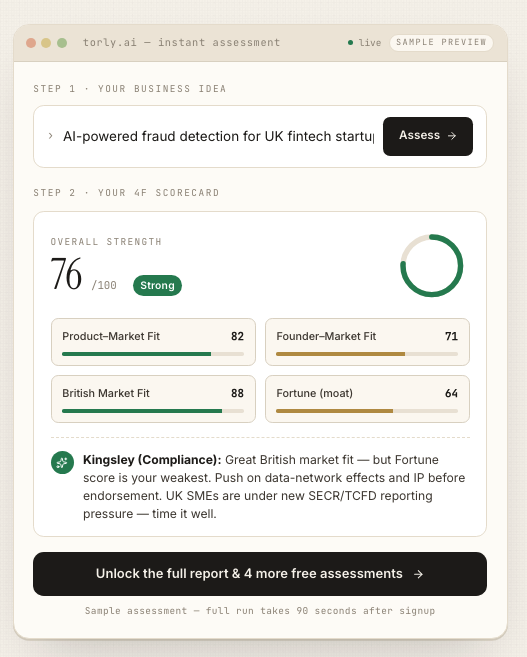
Throughout the three critical dimensions—business idea, founder background, and gap identification—Torly.ai runs continuous bias audits. The result? An assessment process that’s rigorous, transparent, and fair.
Feel free to get hands-on and Build your Business Plan NOW with our desktop app to see these fairness checks in action.
A Midpoint Reminder: Centre Equity in Every Step
Fairness isn’t a one-off test. It’s a continuous commitment. Torly.ai’s agents work 24/7, updating models as new data flows in, ensuring your application never drifts into unfair territory. Curious to see how it handles your specific profile? Start your application with ethical AI assessments and watch the magic unfold.
Best Practices for Ethical AI Assessments
Beyond metrics, here’s how to keep your AI ecosystem on the straight and narrow:
- Implement bias mitigation techniques like re-weighing or adversarial debiasing
- Enforce robust data governance with regular fairness audits
- Maintain human-in-the-loop checkpoints for critical decisions
- Document model changes and provide accessible explanations
These steps mirror approaches in educational research and plug directly into Torly.ai’s workflow—helping you satisfy UK Home Office and endorsing body standards without sacrificing equity.
Don’t wait: Try the TorlyAI BP Builder APP for endorsement-ready planning and get full visibility into every assessment stage.
Spotlight on Torly.ai’s Innovator Visa Assistant
When it comes to legal tech and professional services, Torly.ai stands out:
- 24/7 AI support guarantees continuous feedback
- 95% success rate driven by historical application analysis
- Tailored business documentation aligned with endorsing body criteria
- Gap identification & action roadmap for targeted improvements
All these features coexist within a fairness-first framework. You’re not just getting a score. You’re getting an ethical, transparent evaluation that trusts you as much as it challenges you.
Conclusion: Level the Playing Field with Ethical AI
Equity isn’t optional, especially in life-changing visa decisions. By adopting fairness principles from predictive student models, Torly.ai ensures its ethical AI assessments deliver unbiased, reliable insights—helping entrepreneurs worldwide navigate the UK Innovator Visa process with confidence.
Ready to transform your application journey? Explore ethical AI assessments for your UK Innovator Visa application and step into a fairer future.