Product Reviews · May 17, 2026
Early Detection of Application Gaps: Torly.ai’s AI Approach vs Precision Oncology Models
Discover how Torly.ai’s advanced AI agents perform early gap detection and provide actionable roadmaps for visa application success inspired by precision oncology techniques.


Spotting Gaps Early: Why It Matters
In any complex process, finding gaps early saves time, money and stress. That’s true in medicine and in visa applications. Precision oncology models use AI to detect tiny tumours well before a human eye spots them. Torly.ai brings that same forward-thinking approach to the UK Innovator Founder Visa. By combining multi-layered analysis with intelligent feedback, the platform spots shortcomings in your application and tells you exactly how to fix them.
When you’re serious about turning an idea into a visa-ready business plan, you need tools that work round the clock, adapt as rules change and give you clear steps, not jargon. Torly.ai’s solution delivers all this with unmatched ai service precision, so you can focus on your vision instead of paperwork. Experience ai service precision with our AI-Powered UK Innovator Visa Application Assistant
Understanding Precision Oncology Models
Precision oncology is all about tailoring treatment to each patient’s tumour profile. AI scans medical images, extracts data from biopsies and predicts how a cancer might evolve. Tools like those from leading vendors have:
- Deep learning algorithms trained on millions of images
- Biomarker quantification for targeted therapies
- Genotype predictions that guide immunotherapy
- Seamless integration into clinical workflows
These systems spot risk pathways early and offer clinicians an actionable roadmap. That level of insight revolutionises patient outcomes—and it’s the inspiration behind Torly.ai’s method for identifying visa application gaps before they become deal-breakers.
Key Features of Precision Oncology AI
- Automated image analysis for faster, unbiased results
- Real-time scorecards to track tumour progression
- Multimodal data integration (imaging, genomics, pathology)
- Continuous learning from new clinical data
By comparison, traditional immigration consultancy might rely on checklists and human reviews alone. There’s little adaptability, especially when rules shift. That can leave you blind to subtle mismatches between your profile and endorsement requirements.
Torly.ai’s Multi-Layered AI Agents
Torly.ai’s platform isn’t a simple form-filler. It uses several specialised AI agents, each trained to excel at a different task:
-
Business Idea Qualification
– Does your venture meet UK Home Office innovation criteria?
– Is it scalable, financially viable and defensible in a crowded market? -
Applicant Background Assessment
– How strong is your track record?
– What entrepreneurial skills and domain expertise do you bring? -
Gap Identification & Action Roadmap
– Where do you fall short against endorsing body (EB) standards?
– What precise steps will bridge those gaps—team hires, market research, IP work?
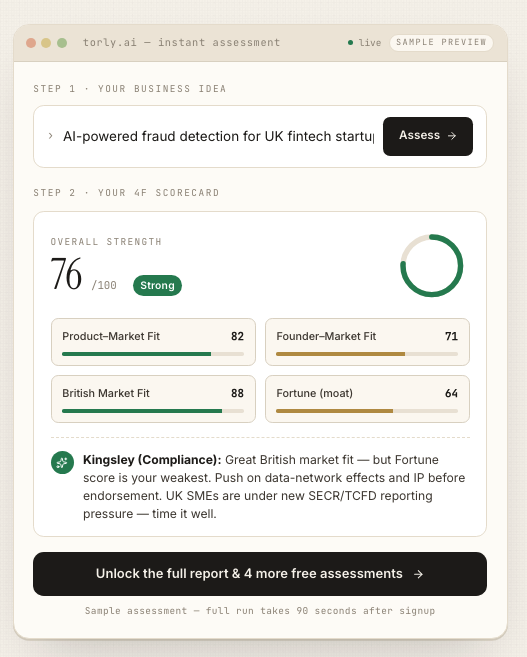
Combined, these agents deliver an ai service precision approach that pinpoints issues instantly. Rather than waiting days for feedback, you get dynamic scoring in under an hour.
After you review the initial gap report, Torly.ai suggests improvements—everything from tightening your value proposition to shoring up financial projections. Then it generates a customised business plan aligned with EB expectations.
And if you need offline access or prefer a desktop tool, you can quickly Build your Business Plan NOW with TorlyAI Desktop APP for complete portability.
Comparing AI Approaches: Oncology vs Visa Applications
Both precision oncology and Torly.ai share some core principles:
- Early detection—recognising tiny issues before they snowball
- Data-driven recommendations—leveraging patterns from hundreds or thousands of cases
- Continuous learning—adapting models as new outcomes arrive
- Seamless integration—fitting into existing workflows (clinical or application processes)
But there are key differences:
- Data types: Oncology uses images, genomics, lab reports. Torly.ai uses resumes, business plans, market research.
- End goals: One aims to treat disease, the other to win visa endorsement.
- Regulatory landscape: Medical AI must clear clinical trials and regulatory bodies. Torly.ai tracks Home Office rules and EB criteria.
Methodology Differences
Precision oncology models typically rely on convolutional neural networks and validated medical datasets. Torly.ai, by contrast, uses agentic reasoning models tuned for immigration compliance. Instead of scanning a mammogram, Torly.ai scans your pitch deck.
Despite those differences, the underlying philosophy is shared: catch anomalies early, then recommend targeted fixes.
Benefits of Early Gap Detection in Applications
Why does early detection matter in visa readiness? A few reasons:
- It cuts the back-and-forth with endorsing bodies.
- You avoid wasted fees from refused submissions.
- You can iterate rapidly, each draft stronger than the last.
- You gain confidence, knowing your plan matches Home Office standards.
Imagine spotting a team-structure weakness before you file. You hire a co-founder who fills that gap. Your application sails through. That’s the power of Torly.ai’s built-in ai service precision.
Realising ai service precision in Visa Planning
Putting ai service precision into practice is straightforward:
- Sign up and fill out your basic profile.
- Upload your idea summary, CV and draft business plan.
- Watch Torly.ai’s agents score each dimension instantly.
- Review a detailed gap report, organised by severity.
- Accept or tweak the suggested action roadmap.
- Download your improved plan or use the online editor for final touches.
Along the way, you’ll see real-time feedback—no guesswork, no delays. If you want the full desktop experience, simply Download Your AI-powered assistant for UK Innovator Founder Visa business plan preparation and work offline at your pace.
Explore ai service precision in action halfway through your prep can make all the difference.
Implementing AI Service Precision: Practical Steps
- Start early—let Torly.ai scan gaps weeks before deadline.
- Prioritise critical risks (EB endorsement likelihood) over minor formatting issues.
- Lean on the action roadmap—avoid generic advice.
- Run regular check-ins as visa rules evolve.
- Collaborate with legal or incubator partners for final validation.
By following these steps, you bring structure and clarity to a process that’s often opaque. You’re not just guessing what an EB wants—you know.
For the ultimate seamless workflow, you can also Get the TorlyAI BP Builder APP – 6 AI Agents handling 31 skills and keep all your drafts in one place.
Conclusion: Embracing AI for Visa Success
Precision oncology and visa applications might seem worlds apart. Yet both benefit hugely from early issue detection and tailored action plans. Torly.ai packages that philosophy into a user-friendly platform built for the UK Innovator Founder Visa.
You don’t need a medical degree or a background in AI. You need clear insights, rapid feedback and a trusted roadmap. Torly.ai delivers all that with unmatched ai service precision.
Ready to transform your application process? Start with ai service precision today
Happy innovating, and here’s to closing gaps before they appear!