Fintech Business Models · May 19, 2026
Crafting Your Fintech Revenue Model for a UK Innovator Founder Visa Application
Learn how Torly.ai’s Innovatorly Matrix and AI-driven tools help fintech entrepreneurs build robust revenue models that meet UK Innovator Visa criteria


Introduction: Why Your Revenue Model Matters for the Innovator Founder Visa
Every UK Innovator Founder Visa application hinges on one core element: a solid, credible revenue model. Without clear projections and realistic assumptions, endorsement bodies will see gaps, not growth potential. Your financial modelling visa strategy must demonstrate innovation, scalability and market traction—right from day one.
In this guide, we’ll compare traditional fintech approaches like Plaid’s API-centric fees with Torly.ai’s AI-powered Innovatorly Matrix. You’ll learn how to craft revenue streams that meet Home Office standards, test viability in minutes and polish your business plan to an endorsement-ready shine. For a seamless financial modelling visa process, try our financial modeling visa AI-Powered UK Innovator Visa Application Assistant.
Understanding the Visa Criteria and the Role of Revenue Models
The Innovator Founder Visa in a Nutshell
The Innovator Founder Visa seeks entrepreneurs who bring genuine innovation to the UK economy. You need:
• A novel, scalable business idea
• Evidence of market demand
• Detailed financial forecasts
• A plan to sustain and grow
Endorsement bodies focus on your revenue blueprint. They ask: can this company generate enough sales to hire staff, cover costs and expand across the UK? That’s where your financial modelling visa credentials come into play.
Why a Robust Revenue Model Is Critical
A revenue model isn’t just a spreadsheet projection; it’s proof you understand your market. It shows:
• Key income streams and their drivers
• Customer acquisition costs vs lifetime value
• Break-even points and profit margins
• Investment needs and runway
Torly.ai’s platform automates much of this heavy lifting, but first you must grasp the fundamentals. Here’s where we draw lessons from Plaid’s popular fintech streams and retool them for visa success.
Lessons from Plaid’s Approach: What Works and Where It Falls Short
Plaid’s revenue model stands as a benchmark in fintech. They generate cash from API connection fees, subscription products and one-off verifications. It’s elegant for pure-play fintech, but not tailored for Innovator Visa criteria.
Strengths of Plaid’s model:
• Diverse income sources from interchange, subscriptions and per-use fees
• Scalable API platform serving thousands of institutions
• Predictable MRR from ongoing connections
Yet for Innovator Visa applicants:
• Little guidance on long-term viability metrics
• No visa-specific scenario testing
• Gaps in documenting founder capability and market strategy
You need more than a fintech template; you need a visa-ready assessment. Here’s how Torly.ai fills those gaps:
- Endorsement-aligned metrics
- Gap identification for visa criteria
- Action-oriented roadmap
After you draft revenue assumptions, don’t forget to Download BP Build Desktop APP for offline business plan authorship.
How Torly.ai Elevates Your Fintech Revenue Model for Visa Success
Innovatorly Matrix: A Multi-Dimensional Assessment
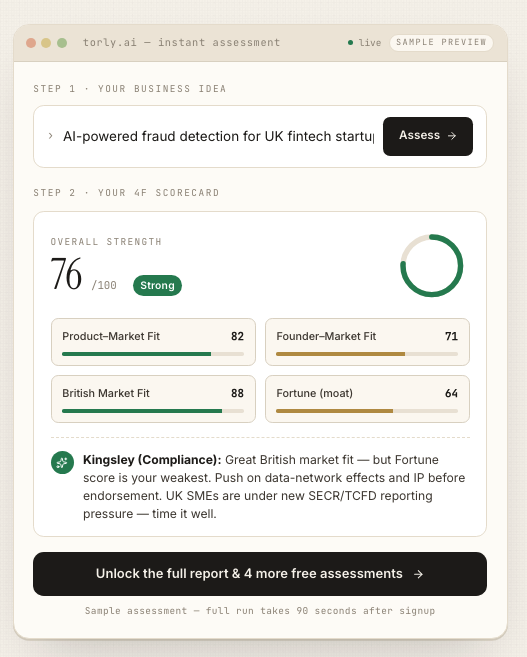
The Innovatorly Matrix sits at the heart of Torly.ai. It evaluates your concept across:
• Innovation and differentiation
• Market viability and competition
• Scalability and financial resilience
Rather than piecemeal feedback, you get a composite score that mirrors Home Office criteria. It highlights strengths to amplify and weaknesses to remedy.
AI-Driven Gap Analysis and Action Roadmap
Once the Matrix flags issues, Torly.ai’s AI agents generate a tailored action plan. You receive:
• Precise documentation tips (financial forecasts, articles of association)
• Market research pointers and competitor benchmarks
• Funding gap analysis and investor pitch guidance
This isn’t a generic checklist. It’s a dynamic, real-time advisory that adapts as visa rules evolve. To experience this fluid support, grab our TorlyAI Desktop APP and start refining your plan now.
Step-by-Step Guide to Building Your Revenue Model with Torly.ai
1. Identify and Validate Revenue Streams
Begin by listing potential income sources, inspired by leading fintech:
• Interchange and processing fees
• Subscription or SaaS models
• Trading or advisory fees
• API connection and per-use charges
• Referral and order-flow payments
• Interest income and lending services
Use the Innovatorly Matrix to test each stream’s viability against UK market data. Torly.ai will flag unrealistic margins or overlooked cost centres.
2. Run Scenario Projections in Minutes
Forget manual Excel torture. Torly.ai’s AI agents:
• Generate best, base and worst-case projections
• Pull UK startup benchmarks for comparison
• Calculate break-even timelines and cash burn rates
At this stage, it helps to Build your Business Plan NOW with the Desktop APP, so you can iterate offline and sync changes later.
3. Validate Founder Fit and Endorsement Readiness
A solid revenue model isn’t enough if your background doesn’t align. Torly.ai assesses:
• Your skillset vs required expertise
• Experience gaps and how to address them
• Team structure and roles needed for success
You’ll get clear steps, like adding an advisory panel or forging a UK-based partnership, to boost endorsement odds.
4. Compile a Visa-Ready Business Plan
Finally, Torly.ai combines all insights into a cohesive document:
• Executive summary tailored to endorsing bodies
• Detailed financial annex with forecasts
• SWOT, TAM and go-to-market strategy
• Compliance and legal checklists
With everything in one place, you’ll breeze through endorsement interviews. For hands-on building, explore the TorlyAI BP Builder APP.
Common Pitfalls and How to Avoid Them
Even seasoned founders stumble on visa applications. Watch out for:
• Over-optimistic uptake rates – use realistic market capture figures
• Ignoring operational costs – factor in VAT, salaries and overhead
• Lacking founder alignment – show why you’re the right person to deliver
• Weak competitor analysis – benchmark against UK incumbents
• Missing contingency plans – include sensitivity analyses
Torly.ai spots these blind spots, so you don’t lose time rewriting.
Putting It All Together: Sample Roadmap
- Week 1: Brainstorm revenue streams, run initial Innovatorly Matrix report
- Week 2: Refine projections with AI-driven scenarios, plug budget gaps
- Week 3: Strengthen founder profile, gather legal docs
- Week 4: Compile plan, final endorsement readiness check
By Month 2, you’ll be endorsement-ready and confident in your financial modelling visa narrative.
Conclusion: Next Steps with Torly.ai
Building a compelling revenue model for your UK Innovator Founder Visa doesn’t have to be daunting. With Torly.ai’s Innovatorly Matrix and AI agents, you get:
• Endorsement-aligned feedback
• Actionable roadmaps
• Visa-compliant business plans in days
Begin your journey and unlock the clarity you need. For expert guidance on crafting your financial modelling visa strategy, visit financial modeling visa support now.