AI for Humanitarian Forecasting · May 21, 2026
Applying AI Forecasting to Innovator Visa Strategy: Lessons from Humanitarian Models
Discover how Torly.ai adapts advanced AI forecasting techniques, like those used in humanitarian models, to refine your Innovator Visa business plan.


Transforming Visa Strategy with Refugee Forecasting Techniques
Imagine knowing weeks in advance whether your Innovator Visa business plan is likely to win endorsement. Sounds ambitious, right? Yet, humanitarian organisations have been doing something similar for refugee flows—using data and complex models to anticipate mass movements, then triggering funding and services before the crisis peaks. What if we applied that same foresight to the UK Innovator Visa process? Enter AI forecasting visa methods for entrepreneurs.
This article explores how learnings from World Bank and UNHCR refugee-flow forecasting can sharpen your visa strategy. You’ll discover real-world lessons on multi-dimensional data, early intervention triggers and continuous feedback loops. We also explain how Torly.ai harnesses these insights, from business-idea qualification to gap analysis, so you can submit a bullet-proof application. Ready to see forecasting at work? AI forecasting visa: Try our AI-Powered UK Innovator Visa Application Assistant
From Refugee Flows to Founder Flows
Humanitarian teams can now predict refugee influxes months in advance with over 80% accuracy. They feed machine-learning models with satellite imagery, climate data, conflict reports and social sentiment. By spotting patterns early, funding bodies pre-position resources and minimise social strain. This proactive stance delivers:
- Better public-service scale-up before numbers spike
- Reduced tension between hosts and newcomers
- More efficient allocation of limited aid budgets
Likewise, an entrepreneur can anticipate weak spots in a business plan, founder profile or market analysis before sending it off. Think of it as contingency planning, but powered by data, not guesswork. Using AI forecasting visa tactics you can:
- Identify which plan sections underperform against endorsement criteria
- Trigger targeted improvements—be it market research or patent searches
- Gain continuous, 24/7 feedback loops to refine your pitch
Key Lessons from Humanitarian Forecasting
1. Multi-Dimensional Data Integration
Refugee models ingest over 90 variables—from economic indices to online chatter. For visa strategy, data sources might include:
- Market size projections
- Competitor analysis trends
- Founder’s past exits and skill endorsements
- Sentiment analysis of social media around your sector
By layering these dimensions, you get a holistic view, rather than relying on intuition alone. This kind of AI forecasting visa approach flags risk zones in a plan early on.
2. Early Trigger Mechanisms
In Uganda, a contingency fund was activated 4–6 months before new arrivals overwhelmed services. In your Innovator Visa process, you can set automated triggers such as:
- A sub-50% score on scalability → prompt deeper market validation
- Low founder credibility rating → schedule a mentoring session
- Patent or IP gaps → engage specialist solicitor
These micro-interventions prevent last-minute rewrites or outright refusals and emulate the rapid response ethos of humanitarian action.
3. Continuous Model Refinement
Models improve by learning from each activation. After a funding cycle, data on performance, community feedback and outcomes shape the next forecast. Similarly, Torly.ai’s AI agents refine their guidance with each application cycle. That feedback loop is the heart of effective AI forecasting visa practice.
How Torly.ai Puts Forecasting into Action
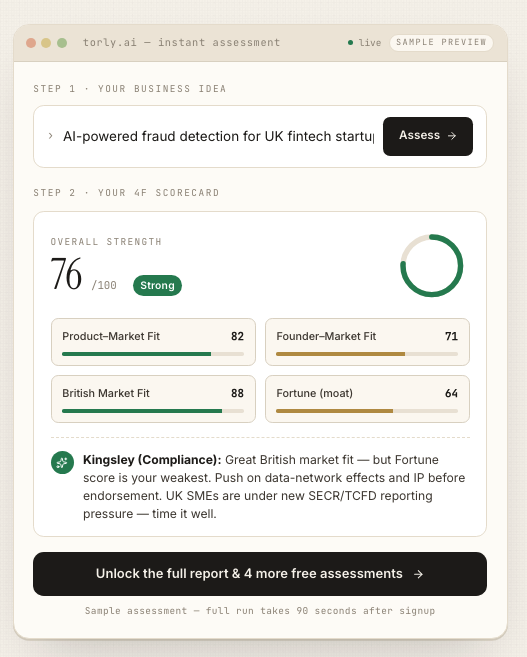
Torly.ai is more than a document checker; it’s an intelligent visa-readiness analyst. Its core modules mirror those refugee forecasting principles:
-
Business Idea Qualification
– Innovation score against Home Office criteria
– Viability analysis using market, competitor and financial data
– Scalability assessment via growth-scenario modelling -
Applicant Background Assessment
– Experience and expertise index
– Network and partnership potential
– Endorsement likelihood forecasting -
Gap Identification & Action Roadmap
– Itemised recommendations for each section
– Prioritised next steps with deadlines
– Resource links (e.g. IP solicitors, sector mentors)
To top it off, entrepreneurs can use Maggie’s AutoBlog—an AI writing assistant—to generate SEO-optimised sections of their business plan or pitch deck. It churns out location-tailored, compelling content, saving hours on research and drafting. This synergy of forecasting and content generation means you’re never caught off-guard. And when you need practical support, Build Your Endorsement Application with 6 AI Agents seamlessly integrates forecasting insights into your living document.
A Founder’s Forecast: A Mini Case Study
Sophie planned a fintech venture in London. Her initial Innovator Visa draft flagged weak market research and an under-documented team CV. With Torly.ai she:
- Collected deeper market signals via sentiment-driven modules
- Updated her founder profile to highlight prior exits and leadership
- Automated a compliance check for all UKBA guidelines
Result? She improved her endorsement score by 40% in under two weeks. No blind spots. No last-minute rush. That’s the power of AI forecasting visa methods meeting intelligent execution.
Practical Steps to Adopt AI Forecasting Visa Methods
-
Gather Diverse Data Streams
Seek not just financials but community sentiment, policy updates and climate of investment. -
Automate Early Warnings
Use threshold-based alerts for sub-par plan sections; don’t wait for a rejection. -
Iterate Rapidly
Sync your plan with real-time feedback. A living document beats a static PDF every time. -
Incorporate Expert Content Generation
Plug in tools like Maggie’s AutoBlog to fast-track high-quality narratives.
By weaving these elements together, your Innovator Visa journey becomes proactive, not reactive. And when you’re ready to streamline your next draft, don’t forget to Build your Business Plan NOW for instant, AI-driven enhancements.
Overcoming Challenges and Ensuring Compliance
No forecasting model is flawless. You must contend with:
- Data privacy and GDPR compliance
- Algorithmic bias and transparency
- Changing UK visa policies
Torly.ai addresses these by hosting all data on secure, GDPR-compliant servers and continuously updating rule-sets to reflect the latest Home Office guidance. Plus, the system logs every scoring decision, so you can audit how each recommendation was formed. In short, transparency meets robust defence.
What Our Founders Say
“Using Torly.ai’s forecasting approach was a revelation. I knew exactly when and how to pivot my market strategy, cutting weeks off my prep.”
— Aisha Kumar, Fintech Startup Founder
“Gap analysis used to feel like guesswork. Now I get pinpointed recommendations and clear next steps. My endorsement came through first time.”
— David Lee, HealthTech Innovator
“Combining forecast insights with Maggie’s AutoBlog saved me over 30 hours on plan writing and lifted my confidence tenfold.”
— Elena Petrova, E-commerce Entrepreneur
Conclusion
Blending humanitarian forecasting tactics with Innovator Visa readiness makes for a potent strategy. You anticipate risks, act early, and refine continuously. Torly.ai wraps these practices into a single, user-friendly platform—complete with business-plan grading, gap recommendation and content generation. Give your application the foresight it deserves. Navigate your AI forecasting visa journey with our AI-Powered UK Innovator Visa Application Assistant