AI Governance · May 4, 2026
AI Governance Essentials: What UK Innovator Visa Platforms Must Know
Explore AI governance essentials and ensure your Innovator Visa platform remains compliant with UK regulations through robust monitoring practices.


Getting a Grip on AI Governance from Day One
Artificial Intelligence can transform how you evaluate and onboard Innovator Visa candidates. But without proper post-deployment monitoring, hidden flaws in your systems can derail compliance, security and trust. This guide walks you through the essentials of AI governance for UK Innovator Visa platforms, balancing the Home Office’s strict criteria with real-world best practices.
We’ll cover why consistent post-deployment monitoring is non-negotiable, how to set up a robust framework, and which metrics matter most. You’ll also discover how Torly.ai integrates continuous oversight into every stage of your Innovator Founder Visa readiness process. post-deployment monitoring with our AI-Powered UK Innovator Visa Application Assistant
Whether you’re a small consultancy or an in-house team at a major endorsement body, you’ll leave with actionable steps to nail governance and stay ahead of regulatory changes. Let’s dive in.
Why Post-Deployment Monitoring Matters for Innovator Visa Platforms
Post-deployment monitoring isn’t a box-ticking exercise. It’s your safety net. Here’s why:
- You spot glitches before they become crises
- You prove compliance to UK authorities
- You build trust with founders and endorsing bodies
- You refine your AI agents to deliver fair, transparent outcomes
Without it, your AI models could drift into bias, security gaps, or outdated regulation. Below we break down the nuts and bolts of this crucial phase.
Understanding Post-Deployment Monitoring
At its core, post-deployment monitoring means:
- Continuously tracking model performance against real data
- Watching for skew or bias in decision outputs
- Logging errors, slowdowns or unexpected patterns
- Auditing third-party services and pre-trained models
This isn’t a one-off check. It’s a living process that spans the AI lifecycle. You’ll need dashboards, alerts and a clear governance policy. That way, you catch odd trends before they affect candidate assessments or your endorsement rates.
Lessons from the Financial Sector
The Financial Stability Board’s recent report on AI monitoring highlighted common challenges:
- Data gaps and lack of shared taxonomies
- Heavy reliance on a few generative AI (GenAI) suppliers
- Operational vulnerabilities due to third-party concentration
Innovator Visa platforms face similar pressures. You rely on cloud services, pre-trained language models and external validation tools. The FSB suggests using indicators such as criticality, concentration and substitutability to assess risk. Applying those insights to your visa pipeline means you can quantify where your system is fragile and build more resilience.
Establishing a Robust Monitoring Framework
A solid framework is your blueprint for effective post-deployment monitoring. Follow these steps:
Defining Key Performance Indicators (KPIs)
Your KPIs must align with Home Office standards and internal goals. Consider:
- Approval rate consistency over time
- False positive/negative assessment ratios
- Model drift metrics (feedback vs predictions)
- Response times for request processing
Set thresholds. If drift exceeds 5 per cent or approval rates swing wildly, your monitoring system flags an alert. This proactive stance keeps your platform compliant and reliable.
Third-Party Risk and Concentration
One big risk area is your dependence on external AI services. A sudden API outage or pricing shock can break your workflow. To guard against this:
- Map critical dependencies (cloud, models, data sources)
- Assess substitutability of each provider
- Track concentration: how much of your process relies on one vendor
- Monitor service-level metrics like uptime, latency and version changes
Integrate these measures into your post-deployment monitoring dashboard. You’ll see at a glance if any third party needs remediation or replacement.
TorlyAI Desktop APP can help you visualise third-party dependencies and automate regular health checks.
Continuous Feedback and Improvement Loops
Monitoring only pays off if you act on insights. Establish a feedback loop:
- Automated alerts trigger stakeholder notifications
- Teams investigate anomalies
- Root causes are documented
- Model retraining or parameter adjustments are scheduled
- Updates are redeployed and re-monitored
This cycle keeps your AI agents sharp and aligned with evolving regulations and endorsement body preferences.
Leveraging Torly.ai for Compliance and Monitoring
Torly.ai shines when it comes to weaving post-deployment monitoring into your Innovator Visa workflow.
AI-Driven Assessments and Alerts
Built on next-generation AI reasoning models, Torly.ai offers:
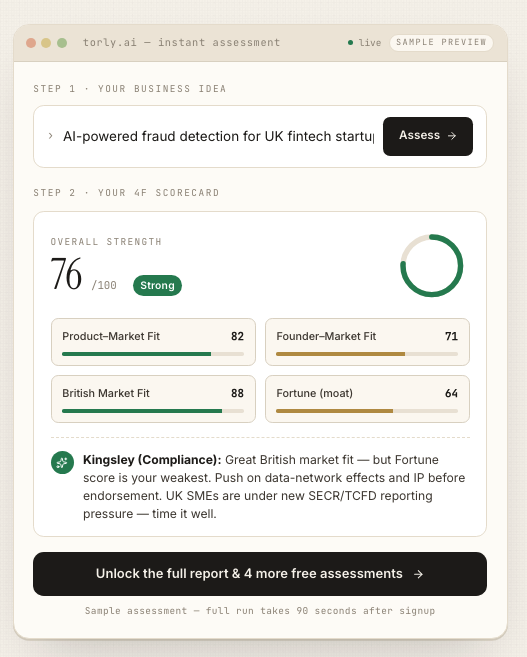
- Instant gap analysis across business idea, applicant background and endorsement criteria
- Real-time alerts when model performance dips
- Customisable dashboards for key metrics
With Torly.ai’s in-platform monitoring, you don’t just catch issues—you predict them before they surface. Learn about post-deployment monitoring from our AI-Powered UK Innovator Visa Application Assistant
Action Roadmaps and Gap Identification
Beyond alerts, Torly.ai suggests concrete steps:
- Business model tweaks to align with EB standards
- Documentation improvements for stronger risk narratives
- Data strategy refinements to reduce bias
By combining continuous oversight with targeted improvement advice, you turn governance from a chore into a competitive advantage. Build your Business Plan NOW
Seamless Integration with Existing Tools
If you already use project management or analytics platforms, Torly.ai plugs in easily. Your post-deployment monitoring metrics feed into familiar channels—no need for a separate console. That means faster uptake, lower training overhead and instant insights across your team.
Best Practices and Common Pitfalls
Even with the best tools, governance can trip you up. Watch out for these:
Aligning with UK Regulations
The Home Office updates visa rules periodically. Your monitoring must:
- Track policy changes in real time
- Flag assessments that deviate from current guidelines
- Archive audit trails to demonstrate due diligence
Failing to adapt quickly can trigger endorsement delays or rejections. A centralised monitoring policy, backed by AI alerts, ensures nothing slips through the cracks.
Avoiding Oversight Traps
People often focus on initial model validation and forget the post-launch phase. Resist these traps:
- Leaving monitoring to chance or manual checks
- Ignoring low-severity alerts until they compound
- Overlooking third-party version updates
Regularly review your monitoring configuration. Test your alerts. Simulate incidents and refine your protocols. Vigilance beats complacency every time.
Looking Ahead: The Future of AI Governance in Visa Platforms
AI governance is fast evolving. Expect more:
- Standardised AI audit frameworks for immigration tech
- Cross-border cooperation on model taxonomies
- Automated compliance certifications integrated into deployment pipelines
Platforms that nail post-deployment monitoring today will be the leaders tomorrow. Early adopters of these best practices will shape standards and attract more founders seeking predictable, transparent endorsement processes.
Conclusion
Mastering AI governance isn’t optional—it’s a requirement for any UK Innovator Visa platform that aims to thrive. Solid post-deployment monitoring protects your reputation, boosts compliance and ensures every founder gets a fair, data-driven assessment. With tools like Torly.ai, you gain the oversight and actionable insights you need, 24/7.
Ready to take your monitoring to the next level? Get your post-deployment monitoring sorted with our AI-Powered UK Innovator Visa Application Assistant